A bane of Southern living is the obligation to greet every last person you encounter, anywhere you happen to be. This isn’t really a conscious choice anyone makes. It’s not even something we necessarily want to do. It’s an involuntary reflex. Part of the regional growth and development we all go through. Like Southern puberty.
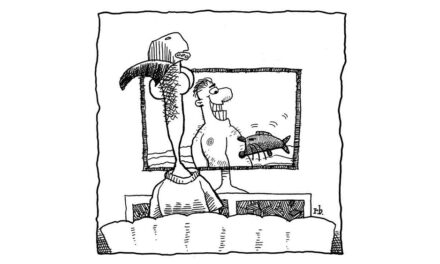
Just as a young person one day discovers unfamiliar hair growing in private places, the young Southerner eventually finds themselves blurting out a casual “hey” or “hello” to anyone who crosses their path. At that moment, one has officially become a Southern man or woman and should strictly avoid close dancing.
Often, Southern greetings don’t go directly to the intended recipient. They travel through relatives instead. Anyone unfamiliar with this custom may recognize examples from television.
“Goober says hey,” Gomer relays. “Hey to Goober,” Andy replies.
But it happens in the real world too.
“Haven’t heard from your dad in a while. Hope he’s doing well. Tell him I said hey.”
“Dad died last year.”
“Well I didn’t know. Give him my best next time you visit the grave.”
This most likely dates back to the era before telephone lines strung through the Southern countryside but it persists today despite the fact that no one doesn’t carry a phone at all times.
“Tell your mama I said hello.”
“I won’t see her until next week.”
“That’s fine. I’ll text her.”
You might expect the shelter of an automobile to act as a shield from these statutory Southern salutations. It does not. One has a responsibility to wave at neighbors on their porch, strangers on their porch, and occasionally livestock watching from the fence line beside the porch. Mooing at said livestock is appropriate but optional. Road crews holding up traffic deserve a wave when they finally let you pass. It’s an unspoken “thank you” that is quick, polite, and does not require sticking your head out the window or dropping your Dunkin’ biscuit.
It is proper Southern protocol to wave when letting someone merge into traffic, or when someone lets you merge. In most cases, failing to wave is considered sufficient cause for road rage, a middle finger salute, or, in some towns, both. Especially if it delays after-church worshippers from reaching the Golden Corral ahead of the rest of the Baptists. A good rule is to wave at everyone on Sundays. It’ll earn you prayers and prevent ass kickings.
I’m not much of a racing fan, but I’ve always believed NASCAR events should consist of half the cars going one direction and the other half going the opposite direction, waving at each other every time they pass. If they pass. It raises the stakes, makes the sport more Southern, and immediately sounds like something I’m likely to tune in to.
The most risky greetings occur at the supermarket. Passing someone in an aisle going the opposite direction from you, creates a new level of anxiety and strategy. The first pass produces a casual exchange and polite greeting, after which both parties move on, fully aware they will soon meet again.
The second acknowledgement must be friendlier since you now share common experience.
“We meet again,” someone says.
“I swear I’m not following you,” you reply. Both parties chuckle.
By the third encounter, familiarity and intimacy has been forced upon you. You’d rather say nothing, but disappointing generations of Southern ancestors on a Thursday night at Kroger feels chancy. Something must be said. You scan their cart and attempt humor.
“Looks like I’m coming to your place for dinner. What time should I arrive?”
“It’s a lot, but I’m buying for my father’s funeral reception.”
You swallow behind your smile. “Well… tell everybody I said hey.” You skip the next aisle entirely. You’ll get canned corn another day.
Awkward greetings aren’t confined to the supermarket. I walk ten loops around my neighborhood for exercise. That’s three miles and there’s often someone walking the same path in the opposite direction.
The first pass is easy.
“Hello, ladies!” I say brightly. A perfect acknowledgement.
The second pass requires restraint. The enthusiasm mustn’t match the initial greeting yet it must not be flippant. A simple lift of the hand in a wave and a polite smile and tilt of the head affirms both their presence and the fact that greetings have already been exchanged.
The third pass is more complicated and frankly irritating. Recognition is still required, but at a lower intensity. This necessitates the chimp smile—lips tucked inward, mouth stretching upward just enough to say, Yes. I know. We are still passing each other.
The fourth pass presents a dilemma. One must either ignore the other party completely—an act of social violence—or escalate beyond the original greeting.
I choose escalation.
This time I pass totally nude, juggling pinecones, while a neighborhood dog spins on its hind legs while wearing a tutu.
“Great day for an extended walk, right, neighbors?” I say.
Immediately, I wonder if the greeting was appropriate or if I have escalated too high.
Before the lap is complete, police officers enter the neighborhood and stop their cruiser in front of me, blue lights flashing. I stop juggling. The dog is gone. I raise a hand and greet them.
They do not return the greeting.
Yankee cops. Probably from Wisconsin.
[Photo by Alexander Grey on Unsplash]

Like this story? Support this writer: