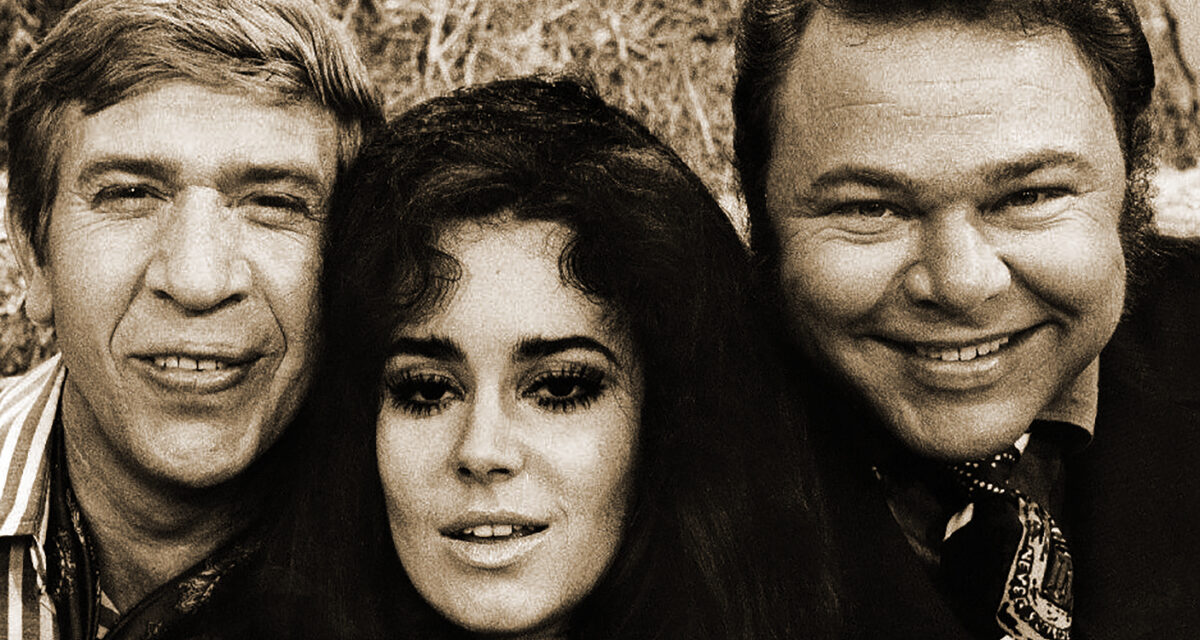
Few television shows have shaped the public’s idea of Southern humor as profoundly as Hee Haw. If you grew up in the South, you’ve lived under the shadow of its broad caricatures whether you embraced them or spent your life trying to escape them. And if you came of age during the 1970s, there’s a good chance your television was set to CBS on Saturday night.
My connection to the show was a little more personal. Before I was born, both of my parents appeared on Archie Campbell’s old variety program in East Tennessee while trying to break into the music business. Maybe that’s why Hee Haw became a weekly fixture in our house. My father, who grew up on a large mountain farm in Tennessee, rarely missed an episode. He had an affection for its cartoonish hillbilly world that I never quite shared. Even as a kid, I found much of it embarrassing.
What I didn’t realize at the time was that Hee Haw was teaching me to love sketch comedy.
The 1970s were the golden age of television variety shows. Rowan & Martin’s Laugh-In had already demonstrated what rapid-fire sketches could do, and Hee Haw borrowed that format for a rural audience. Soon, sketch comedy seemed to be everywhere: The Carol Burnett Show, The Sonny & Cher Comedy Hour, The Flip Wilson Show, Dean Martin, The Captain and Tennille, even The Brady Bunch eventually had its turn. Looking back, I can draw a straight line from those shows to Monty Python and Kids in the Hall, two of my favorites today.
But Hee Haw was more than a sketch show. It was a cultural zeitgeist. A weekly mixture of comedy, country music, celebrity guests, cornpone philosophy, and affectionate self-parody. My family laughed right along with everyone else, but we also understood something viewers outside the South often missed. Like every family, we knew the difference between laughing at ourselves and being mistaken for the joke.
The dancing pigs in bikinis, the moonshiners, the lazy farmers, the barefoot bumpkins, we knew they weren’t real. They were exaggerations, familiar enough for us to recognize and ridiculous enough to laugh at. What worried us was that people who had never set foot in the South might assume they were watching a documentary.
The humor of Hee Haw was proudly broad, lowbrow, and unapologetically stereotypical. It wasn’t trying to be subtle, and television ratings rewarded it for decades. Still, I’ve often wondered whether there might have been room for a different kind of Southern comedy. One that was just as unmistakably Southern, but a little less… predictable. Or maybe not. Maybe America wasn’t interested.
What would that version of Hee Haw have looked like?
Would the dancing pigs wear reading glasses and carry Noam Chomsky paperbacks? Would organic farmers sip expensive bourbon while debating Kierkegaard at the feed store?
That question led me to a little experiment.
Below is a perfectly ordinary “classic” Hee Haw sketch, followed by six rewrites in the voices of six very different writers. Some are faithful. Others wander into more strange hollers. Together they ask a simple question:
How much of Hee Haw belongs to the hillbilly joke. And how much belongs to the writer telling it?
Call BR-549.
The Classic Hee Haw-style Sketch
SETTING: In front of the Kornfield Kounty General Store. JUNIOR is sitting in a rocking chair with Beauregard the Wonder Dog at his feet. GRANDPA walks up.
GRANDPA
Junior, your wife says you ain’t done a lick of work all week.
JUNIOR
That ain’t true. On Monday I fixed the roof.
GRANDPA
What about Tuesday?
JUNIOR
It rained Tuesday.
GRANDPA
Well, what’d you do Wednesday?
JUNIOR
I took the roof back off.
GRANDPA
What did you do that for?
JUNIOR
The sun came back out.
[BANJO STING. BEAUREGARD whines and rolls over.]
As Written By Ernest Hemingway
Junior sat in the chair outside the store. The dog lay beside him. It was hot and the road was dry.
The old man came up.
“Your wife says you haven’t worked all week.”
“She is wrong.”
“What did you do?”
“I fixed the roof Monday.”
“And Tuesday?”
“It rained.”
“And Wednesday?”
“I took the roof off.”
The old man looked at him.
“Why?”
“The sun came back out.”
The dog rolled onto its back.
The old man looked at the roofless house across the road. Then he looked at Junior.
The sun was very bright.
“Yes,” he said. “It did.”
As Written By Virginia Woolf
Monday, thought Junior, rocking gently beneath the enormous blue bowl of the afternoon, Monday had been the roof; hammer, nail, board, the peculiar satisfactory tap tap tap of a thing being made whole, while inside his wife had complained, as she always complained, that nothing was ever finished.
And then Tuesday came with rain.
Rain upon the roof. Rain upon the road. Rain running silver from the eaves, and Junior had looked upward and felt, perhaps for one brief moment, that he had done something useful.
But Wednesday—
“What did you do Wednesday?” Grandpa asked.
Wednesday.
The sun had returned.
It poured itself across the fields, across the Kornfield Kounty general store, across Beauregard sleeping at his feet. And what purpose could a roof possibly serve beneath such a sky?
“I took it back off.”
Grandpa stared at him.
“What did you do that for?”
Junior rocked.
“The sun came back out.”
Beauregard rolled onto his back.
And there it was: another small certainty confidently arranged by a man, to be quietly endured by the woman who must go on living beneath it, or without it.
As Written by David Lynch
EXT. – KORNFIELD KOUNTY GENERAL STORE – DAY
JUNIOR rocks in a chair on the porch. BEAUREGARD lies at his feet. There is no wind. The squeaky rocking chair sounds like an infant.
SQUEAK.
SQUEAK.
SQUEAK.
GRANDPA appears.
GRANDPA
Junior…
(the rocking stops)
Your wife says you haven’t worked all week.
JUNIOR looks toward the sky. Cloud shadows wipe across his face. He weeps.
JUNIOR
That ain’t true. Monday I fixed the roof.
Music and shouts from a distant carnival interrupt the long silence.
GRANDPA
What happened Tuesday?
JUNIOR
It rained.
GRANDPA looks at BEAUREGARD. BEAUREGARD embraces a framed 8×10 of the late actress BONNIE FRANKLIN.
GRANDPA
And Wednesday?
JUNIOR
(swats at a mosquito and bites into a salt block)
I took the roof back off.
GRANDPA
(stepping closer)
Why?
JUNIOR
(looks directly into the camera)
The sun came back out.
BEAUREGARD whines, then rolls over.
INT. – KORNFIELD KOUNTY GENERAL STORE – DAY
An Asian man in full Native American costume begins playing “Cripple Creek” on the banjo, accompanied by ROY CLARK and BUCK OWENS. A large Gospel choir hums in the background. GEORGE “GOOBER” LINDSAY plucks a feather from the man’s headdress and blows it off screen.
GRANDPA looks up. The sun is gone.
As Written by William S. Burroughs
Monday Roof Operation (MRO)
Hammer (and nails), shingles, black tar… Seal the house against the Rain Department… Wife inside transmitting complaints through bland breakfast. In her thin gown she appears… a nude, shaved rat.
Tuesday precipitation program begins. Rain (the sky’s toilet has backed up), rain and more rain. Eventually, the roof is successful.
Junior… nervously rocking back and forth at kounty General Store Sector. Beauregard Canine Unit, exhibiting advanced homosexual paranoia, asleep at his translucent boots.
Grandpa drifting over, wrinkled pink flesh reeking of corn liquor. (Note: Dealer or a cop? Check his shoes.) “J, your wife reports no labor all week.”
He sneers at the old man. “False report.”
“Monday?” Grandpa is stuffing a corpse-colored paper bag into his back pocket and vomiting.
Junior tastes metal, his eyes dead. “Installed roof.”
“Tuesday? (Give me a cigarette)…”
“Rain. Christ… bugs all over my arms.”
The old man feels the need to piss. “Wednesday, then?
Junior’s voice swelling like a whore’s breast. “Removed the roof… (Suddenly) Whose Grandpa are you?”
“Why remove the protective structure?” Grandpa remembers his last strong cup of coffee and erection.
Junior’s face tightens to a benign tumor. “Sun came back out.”
Silence… Cigarette is crushed under foot… Beauregard whines. (Note: Dog has always understood.)
Banjo transmission begins. The roof lies behind the house waiting for rain as a lesbian junkie, vein open for the black tar.
As Written by Sylvia Plath
The roof sat on the house
like a black hat.
On Monday
I nailed it down,
board by board,
shingle by shingle,
until the sky
could no longer enter.
On Tuesday
the rain came,
a thousand small fingers
testing my work.
And the roof held.
By Wednesday
the sun returned,
gold and terrible,
filling the fields,
calling everything
back into the light.
So I tore the roof away.
Grandpa asked why.
“The sun came back out,”
I said.
At my feet
the dog whimpered
and surrendered
his belly
to the enormous sky.
As Written By David Foster Wallace
Junior’s wife’s allegation that he had “not done a lick of work all week” was, strictly speaking, demonstrably false, although this depended upon whether one considered the installation and subsequent removal of the same roof to constitute two separate acts of productive labor or merely one extremely inefficient home-improvement project.*
“So what’d you do Monday?” Grandpa asked.
“Fixed the roof.”
“What about Tuesday?”
“It rained.”
“And Wednesday?”
“Took the roof back off.”
Grandpa looked at Junior.
Beauregard the Wonder Dog, whose status as a “Wonder Dog” appeared to rest primarily on his willingness to remain in Junior’s company despite ample opportunity to escape, opened one eye.
“What did you do that for?”
Junior shrugged.
“Well, the sun came back out.”
There followed a banjo sting of approximately 1.7 seconds.
Beauregard whined and rolled onto his back.
This was funny.
It was also, if you thought about it for more than perhaps thirty seconds, an essentially complete description of mankind’s relationship with both nature and home ownership.
* Junior’s wife would later dispute the word “fixed,” noting that (a) the roof had not previously been broken, (b) Junior had installed it largely because rain had been forecast for Tuesday, and (c) he apparently understood a roof not as a permanent architectural component but as an extremely large umbrella.

Like this story? Support this writer: