When I was growing up, every Mother’s Day was spent in Sneedville, Tennessee, on the Overton family farm where my great-aunt Kate lived and where my dad spent his boyhood. My great-grandparents, Tip and Emma Overton, originally owned the farm and, in a fine example of a cosmic joke, produced seven children—all girls. Not exactly what Tip had in mind when they bought a farm, I’m sure. While the girls made capable farmhands when necessary, they were also wonderful cooks, so our family gatherings always involved a bounty of perfectly prepared Southern food. It was there that I learned to despise rhubarb.
Rhubarb was discussed in my family the way Italian families in Queens discuss pasta. My father had grown up with it and wanted his boys to love it the way some dads encourage their sons to love shooting a shotgun or kissing a real girl instead of a pillow. There were a lot of foods my father embraced which, frankly, terrified me. He had a taste for the oddest Appalachian delicacies. Foods like chewy pig’s feet pâté or cornpone tobacco ice cream. Menus that once killed many early Southern pioneers—and left just as many others unable to produce heirs with properly sized ears.
Once, my dad decided he wanted chitlins like he’d had as a kid. He bought a “mess” from a roadside chitlin vendor and insisted on cooking them the “old way.” The “old way” actually involved women cooking the chitlins while men sat on the porch whittling and discussing fertilizer. I’m not convinced my dad was ever in a kitchen where anyone cooked a mess of chitlins, let alone a single chit—which meant he didn’t know to clean them as thoroughly as government health officials recommend for edible pig intestines. For a week, our entire house smelled like the men’s room at the downtown Knoxville Greyhound station. That was the year my father taught me how to drive a stick shift and gave me E. coli in a single month.
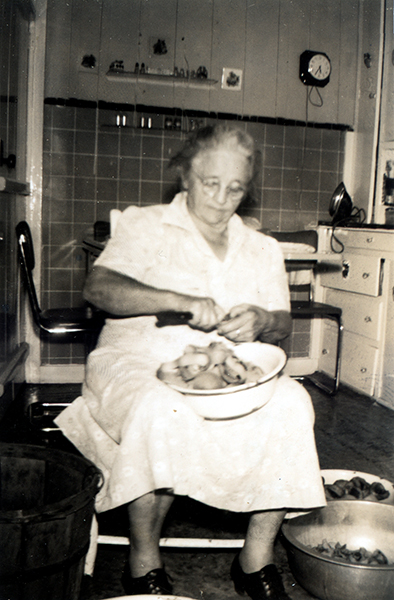
My great grandmother Emma Snodgrass Overton prepping fruits and vegetables including, probably, rhubarb.
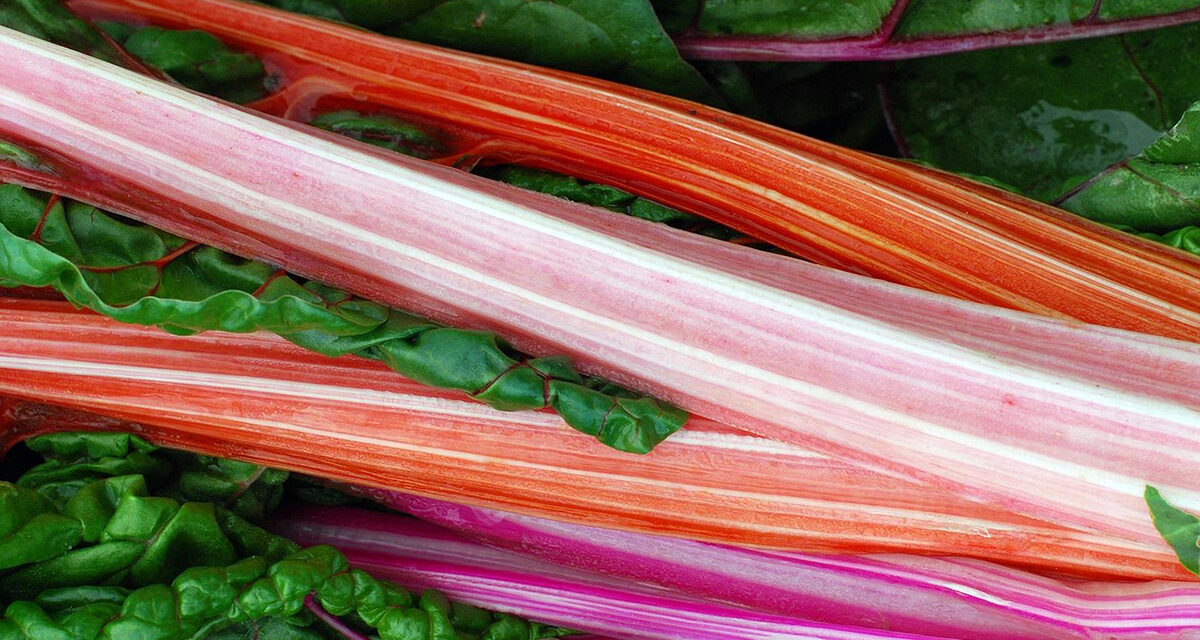
The name “rhubarb” comes from the old French word, rubarbe, meaning “floor tile adhesive.” It looks how you might expect—pink and red, in stringy stalks like celery that’s been worked over by small town Virginia law enforcement. The leaves are poisonous, which should have been a clue, but for years people used it for medicinal purposes and as a laxative. Really, nothing says Mother’s Day quite like serving a poisonous laxative to the family.
I’ve often wondered who the first villager was tasked with putting unknown plants, berries, and roots into their mouth to see if the rest of the village could eat them safely. No doubt more than a few early family gatherings were ruined that way. Entire families sprawled out like Jonestown after a Kool-aid break. Still, you have to admire the stubbornness. When the leaves killed people, the rest just kept eating until they figured out the stalks were fine but the leaves were deadly. These people really loved rhubarb. Somewhere along the line, a doctor must have come out to a waiting room and said, “I’m sorry, ma’am, the rhubarb killed your boy,” and the woman said, “Huh. Well, I got more sons. Guess I’ll try a different part of the rhubarb.”
I’ve never cooked rhubarb myself, and I’m too lazy to look it up, but I assume it’s prepared by boiling it in an old, forest witch’s rusty cauldron—or possibly a regular kitchen stove. In our family, my great-aunt and grandmother waited until it became a hot, stringy, gelatinous mass, then oozed it into an expensive Taylor-Smith & Taylor serving bowl. The bowl would go around the table, and everyone would spoon out a congealed sludge-pattie onto their plate next to the normal fried chicken and green beans.
I always expected it to burn through my plate like lava scooped onto a biscuit. My brothers would shovel the tart-sweet goo into their mouths like zombies devouring fresh brains. To me it was like slurping down a sinus infection. All I could do was watch it seep onto my other food and dissolve it all into a slurry of mystery jelly. Why my father didn’t use this stuff to sanitize his hog intestines is anyone’s guess.
Many years after we stopped going to the Overton farm and my grandmother and great aunts had passed away, I was newly married and preparing to go to a Christmas party when my wife asked me to sample the special dessert she had made for the gathering.
“What is it?” I asked.
“Rhubarb squares,” she said happily.
I watched a flock of buzzards settle onto our front lawn and heard the slow dirge of a New Orleans funeral procession drifting in from the alleyway. I calculated the cost of a quickie divorce. My wife presented the square to me on a small porcelain dish we had gotten as a wedding present, so far unmelted. The square had a base of graham cracker crust and there was something nutty on top—maybe granola. A happy dollop of whipped cream danced on the surface. Pinkish goop ran from the sides like the devil’s toothpaste. The last thing I wanted to do was put any part of that cursed square in my mouth.
Most marriage counselors will tell you a high percentage of failures come from poor communication. What they won’t tell you is that forcing someone to eat rhubarb ranks pretty high too. But I’m here to tell you, eating a fork full of rhubarb squares is much cheaper than marriage counseling or divorce. So that’s what I did.
“Wait, did you say this is rhubarb?” I asked.
“Yes,” she said.
“Like real rhubarb? Rhubarb, rhubarb?”
“Yes,” she said. “In square form. What do you think?”
I steadied myself on a kitchen chair and swallowed.
“This is the most amazing thing I’ve ever had in my mouth,” I said cutting another fork full. “Jeez, I wish my aunt and grandmother and dad were here right now.”
“I’m glad you like it,” she said.
I shoved the last bite of rhubarb square into my mouth. “Do you know how to wash chitlins?”

Like this story? Support this writer: