by Tony Breland
As far as I can tell, my father is the only person in Alabama history to lose a fight to a squirrel.
Our vegetable garden was at the back end of our pine-studded yard, surrounded by a makeshift fence of wooden posts and chicken wire that did little to keep out the rabbits from the woods beyond our property.
This garden was nothing compared to the ten acres my father helped maintain as a boy growing up in Perry County, Alabama. Barefoot, he would pick purple hull peas by the five-gallon bucket, his hands stained violet at the end of the day’s work.
In comparison, this meager patch of okra, radishes, and squash was a child’s garden. But my father had been a proud member of the Future Farmers of America, class of 1954, and he had a reputation to uphold.
He had not become a farmer. Instead, he left home for Birmingham, took a job in the steel mill, and bought a modest home in the suburbs for his new wife. He was officially citified.
On this summer day, I trailed behind my father as he inspected his crops. He walked the rows, then stopped.
I flinched at his sudden halt and watched as his hand swung backward, palm open as if shielding me. I peered past him to see the source of his surprise.
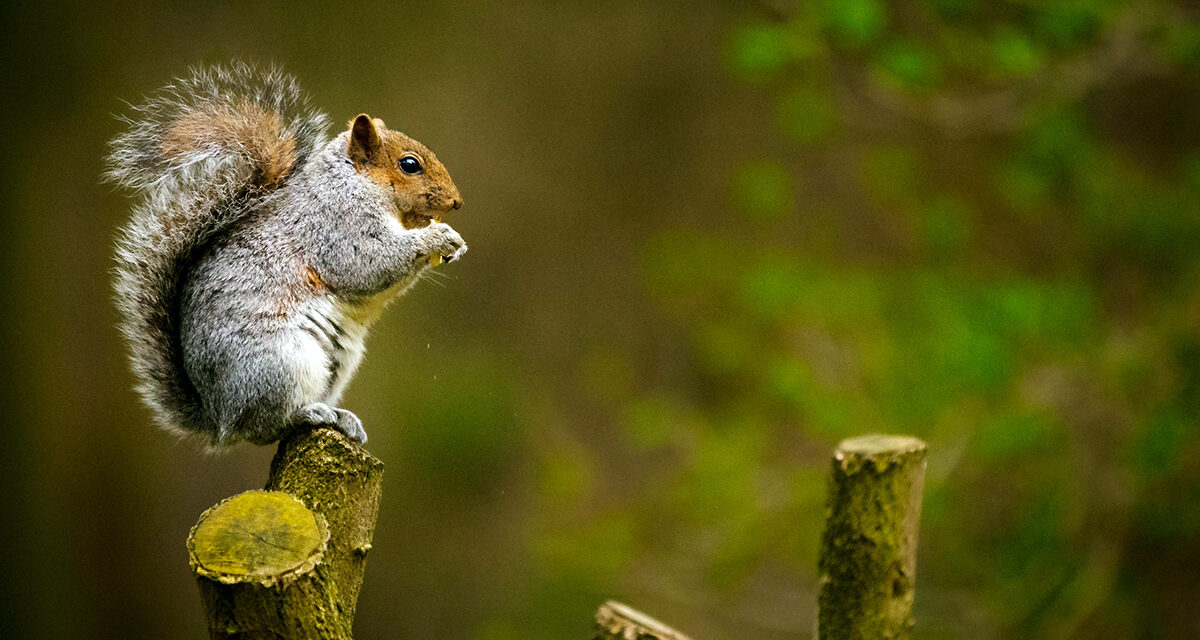
A gray squirrel perched on the corner post of the garden, watching us.
“Look at that,” he said after I was already, in fact, looking at that.
For a moment, the squirrel and my father locked eyes. Its tail twitched.
“I’m going to see how close I can get before he runs away,” he said, moving closer.
I thought this was a brilliant idea, and that my father was a genius for coming up with such a flawless plan. I was seven years old and knew genius when I was in its presence.
I waited for the squirrel to retreat into the woods. But as my father inched forward, it remained motionless, watching him.
Without warning, the squirrel attacked.
Like a gray missile, the squirrel flew through the air, landing on my father’s forearm. He spun in place, flailing as the rodent sank teeth and claws into his flesh.
I stood frozen. I had no context for a squirrel attack outside of a Saturday morning cartoon.
In seconds it was over. The squirrel flung itself to the ground and darted to the tree line, scurrying up the live oak where my tire swing hung from a high branch.
Blood streamed from the gash on my father’s arm. He ran toward the house, and I followed, fighting back tears. I could barely comprehend the calamity that had befallen us at the hands of this tiny marauder.
Inside, he pressed wet paper towels to his arm to stanch the flow of blood, then retrieved his ivory-handled (though in truth it was likely plastic) single-action .22 revolver. The paper had turned pink, and droplets hit the linoleum floor as he charged to the back door. I dodged from his path and followed him to the scene of the assault.
When we returned to the oak tree, the squirrel was, to my amazement, still perched there like a sentinel of death, if death had a fluffy tail.
Half a century later, I can attest that there was a squirrel perched in the oak tree. Whether it was the squirrel that had recently been attached to my father’s forearm, I could not swear. It is possible that it was another squirrel with a better alibi.
My father raised the pistol into the air and squeezed off a single shot. The report rang in my ears as I watched the rodent fall to the ground, dead by the time it landed.
Holding his enemy by the tail, he rushed back to the house where my mother waited in the passenger seat of our old Chevrolet. I climbed into the back as my father dropped the carcass onto the floorboard of the driver’s side and we roared away.
I was deposited at the home of a cousin while my parents went to the emergency room. There, my father presented the squirrel for rabies testing while he got stitched and bandaged.
That evening, we regrouped at home. Few words passed between us about what would become known on Loblolly Street as The Squirrel Incident.
My father’s arm is now old and withered, the muscle diminished and the skin bruised from blood thinners. But if you know where to look, a thin white scar remains.
That year, the squash tasted sweeter than ever before.

Tony Breland is writer, storyteller, and Alabama native living in Phoenix. His work has appeared in The Dead Mule School of Southern Literature, BamaHammer, and The Cynic. Reach him at tonybrelandwrites@gmail.com